Showing posts with label Consolations. Show all posts

Monday, June 29, 2026

Look at that Bird

 Herself speaks. 

There's a term in relationship-speak referred to as a "bid for connection": a verbal (or nonverbal) attempt to get another person's attention, affection, support, or interaction. The term was apparently popularized by John and Julie Gottman, who are "relationship researchers" (that feels, in the words of movie Hermione Granger, like a "very woolly discipline"). 

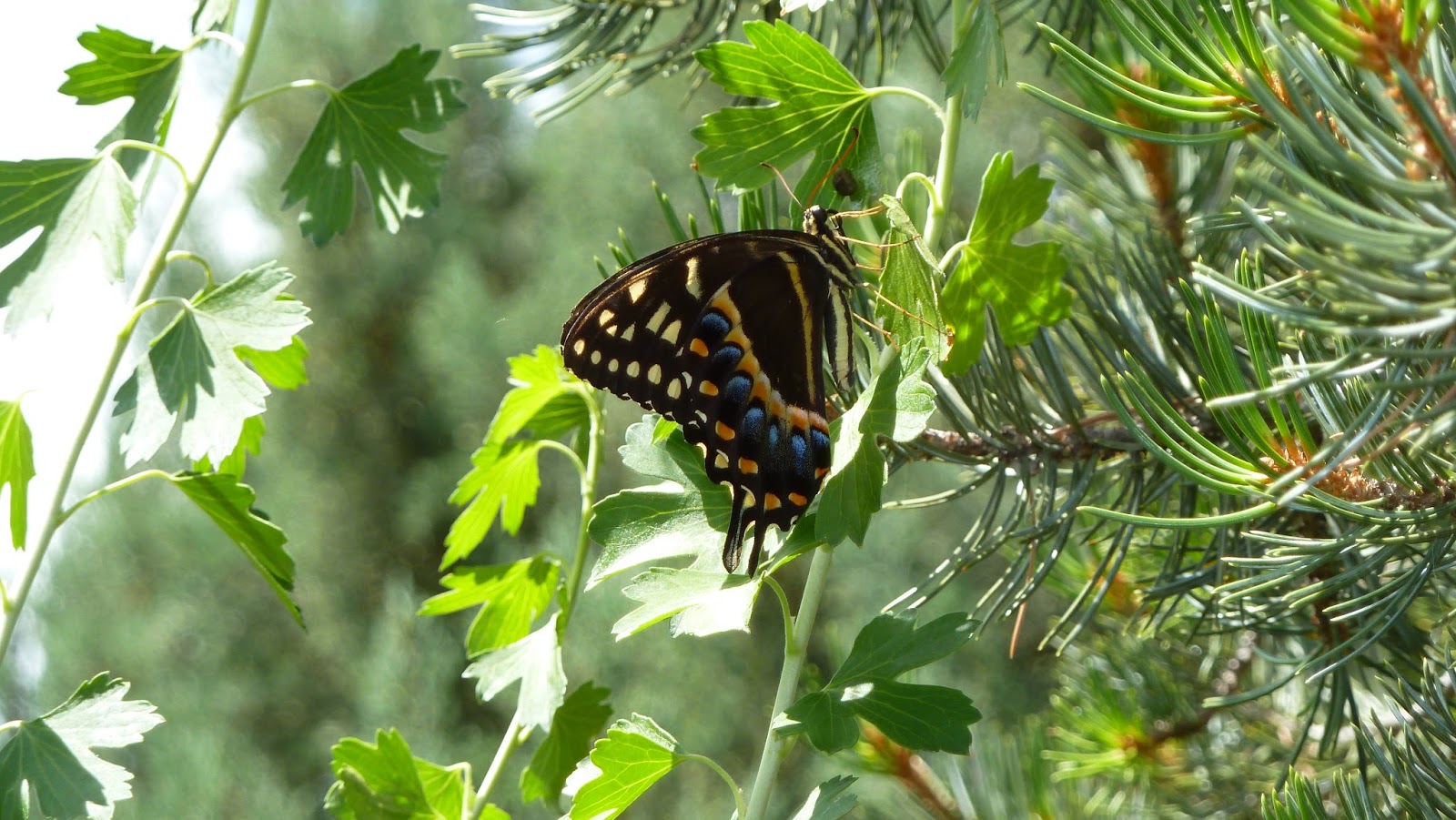
I've seen the bid for connection recently on TikTok, described as the "look at that bird" experiment: one person says to their partner/significant other, "look at that bird!" What does the other person do? Do they look? Comment? Research the type of bird? Relay their own bird story? The level of resultant interaction based on the initial "bid" provides the asker information about their relationship with the ask-ee (and also about the state of mind of the ask-ee at that particular moment, to be sure; can't make sweeping generalizations from a single bird moment). It's an interesting idea.

I've spent some time watching my own Bid activity with my own People. It looks like this: if I can, I try to feel people out before I even get to the Bid stage -- will they be amenable to conversation or interaction? Are they busy? Are they mired in their own Stuff? Is this even a moment to point out, "look at that bird!" Assuming I can make an assessment and deem the Bid winds to be favorable, I send forth a Bid. If I am feeling brave, I may blindly send out a Bid without such knowledge. Either way, I know full well that it may be hours before a response appears, but hope all the same for eventual connection. 

I've discovered: I don't even get to the Bid stage much of the time; and when I do, so very many Bids go unanswered. 

It's a bit discouraging.

My People are so involved in their own Things that (my impression is) very often, a Bid will be unsuccessful or possibly even unwelcome. Everyone is either too busy, or disinterested, or in need of their own emotional support, or promptly vacates a conversation to attend to other matters. (In the latter case, I am torn between feelings of, thank you for acknowledging my Bid however briefly, compared to, having a truncated Bid feels worse than "I see your Bid but can't talk now, let's talk later when I can give you my full attention." No one says that and follows through, though.) 

I don't want to be a burden, or a bother. Can't just blurt stuff out Bid-wise when people don't have the headspace for it. And so I am slowly becoming more and more silent.

When a Bid is not picked up but just dangles there, out in the wild, waiting, I feel awkward. Unanswered small questions litter my texts and my environs, like dry oak leaves stirring with my steps. I scurry away from my one-sided conversations, and go hide. Never mind. I'll be (more) quiet now. 

Does no one have any extra bandwidth right now? Am I just... not compelling enough for people to ask what's on my mind or in my heart, or what bird is outside my window? 

It's hard not to take it personally. I know they're busy.

Should I take it personally? Maybe it's me. 

Maybe No One wants to hear what I have to say. There's a certain complexity/sorrow/depth to thoughts and feelings lately. Most people aren't comfortable with that. OK, then.

Send me a Bid and I'll listen, though. Tell me about your Birds. 

Wednesday, December 12, 2018

Friday, July 22, 2016

Help

I am returning to a theme from nearly a year ago: words I have chosen from Consolations, by David Whyte. Today's word is: help.

Help is strangely, something we want to do without, as if the very idea disturbs and blurs the boundaries of our individual endeavors, as if we cannot face how much we need in order to go on. We are born with an absolute necessity for help, grow well only with a continuous succession of extended hands, and as adults depend upon others for our further successes and possibilities in life even as competent individuals. Even the most solitary writer needs a reader....

It may be that the ability to know the necessity for help; to know how to look for that help and then most importantly, how to ask for it, is one of the primary transformative dynamics that allows us to emancipate ourselves into each new epoch of our lives. 

Here's to Help. May we learn how to seek it, and may we find it, when we are most in need.

Sunday, March 20, 2016

Bridge

Herself speaks.

I visited the Rio Grande Gorge bridge this weekend.

Picture copyright 2016, Mediocria Firma. Used with gratitude.

It is a beautiful structure, spanning a beautiful expanse of nature. The gorge is a testament to the power of water through time, carved into the flat terrain as if some supernatural hand dragged a giant stick across the landscape.


There are locks and mementos -- little pieces of lives linked to the bridge. What are the stories behind them, I wonder?


Across the bridge there are various spots in the railings where one can stand and look out across the gorge. And there, in the spaces, are these call boxes:


This simple box, with the handwritten scrawl of you are loved, is heart-wrenching. You can almost feel the despair surrounding it. And I wonder: who is there on the other side of that red button? And is that person's voice reaching out, enough to tie a soul to this earth, when the wind whips and the chasm yawns and hope seems to be lost?

Broken souls: I am sorry that the abyss called you to it, and I hope you are at peace now. And I wish for all of you who struggle, that you may find tranquility and solace when you need it most.

Fortunate are we who know individuals who, purely through their presence, allow us to feel repaired, at ease, and most ourselves. And grateful are we, beyond measure, for the time together. Always.

Blue October, Not Broken Anymore. 

Sunday, September 13, 2015

Solace

The next word I have chosen from Consolations, by David Whyte, is one of the most beautiful words of all:  Solace.

Solace is the art of asking the beautiful question, of ourselves, of our world or of one another, in fiercely difficult and un-beautiful moments.  Solace is what we must look for when the mind cannot bear the pain, the loss or the suffering that eventually touches every life and every endeavor; when longing does not come to fruition in a form we can recognize, when people we know and love disappear, when hope must take a different form than the one we have shaped for it. 

My greatest wish: to bring consolation in the time of need. 

I am here for you.

Picture copyright 2014, 2015, Mediocria Firma. Used with gratitude.

Saturday, September 12, 2015

Silence

The next word I have chosen from Consolations, by David Whyte: Silence.

Silence is frightening, an intimation of the end, the graveyard of fixed identities.  Real silence puts any present understanding to shame; orphans us from certainty; leads us beyond the well-known and accepted reality and confronts us with the unknown and previously unacceptable conversation about to break in upon our lives.  

When I was a tiny little girl, I had a fever nightmare. I dreamt that I was in a dark void. The void was not crowded, nor was it vast; it was a nothingness in which I was strangely comfortable. But then I heard a shout. The shout was not a sound that came through my ears, but rather a visceral sensation that resonated throughout my inchoate body. I did not know where the shout came from, nor did I understand its single syllable word. The shout was Silence itself, and yet was Not-Silence, and it repeated at intervals, growing ominously louder and yet more silent simultaneously, until finally I awoke into consciousness, sweating, heart pounding. I threw myself out of bed and ran down the hall towards the light of my father's study, with the incomprehensible Silent Not-Silence echoing in my brain. I could not tell my father what was so terribly wrong. I had no words. He turned from his desk and gently picked me up.

That is all I remember.
-----

Forty-five years later, I am still occasionally terrified of Silence.

Literal Silence is surprisingly hard to come across. Even in the wee hours, there are still crickets, night birds, the rumble of a distant truck. Even on a quiet afternoon, there is the hum of the washing machine, the buzz of a cicada. Silence instead comes in different forms: a phone call not returned. An e-mail or a text sent out into the ether, generating no reply. A plea unheard, a conversation stalled or dismissed, a glance not shared. A whisper that falls into the cracks of the world. A question left hanging.  An unanswered prayer.

These Silences are the hardest.

I can always think of 100 different, perfectly normal reasons, for such Silences. And yet, there is always one terrible reason, a reason that makes my blood run cold, that lurks in the background, waiting, exuding Silence and Not-Silence until I want to run.

I am a grownup. There is no where to run any more.

Have mercy, Silent Not-Silence, for I am still small, and needy.

Picture copyright 2015, Mediocria Firma. Used with gratitude.

Friday, September 4, 2015

The Next Word

The next word I have chosen from Consolations, by David Whyte:  Heartbreak.

Heartbreak is unpreventable; the natural outcome of caring for people and things over which we have no control, of holding in our affections those who inevitably move beyond our line of sight.

Heartbreak occurs in ways both giant and tiny. As it is inevitable, 
so it must be embraced. 'Tis a difficult, and necessary, part of being fully human. 

Picture copyright 2015, Mediocria Firma. Used with gratitude.

Wednesday, September 2, 2015

Friendship

The next word I have chosen from Consolations, by David Whyte: "friendship." David Whyte sees friendship in a very similar manner as John O'Donohue in Anam Cara. Lovely. I need not parse this essay, for it speaks for itself.

It reminds me of Cherished Friend.
-----
[N]o matter the medicinal virtues of being a true friend or sustaining a long close relationship with another, the ultimate touchstone of friendship is not improvement, neither of the other nor of the self, the ultimate touchstone is witness, the privilege of having been seen by someone and the equal privilege of being granted the sight of the essence of another, to have walked with them and to have believed in them, and sometimes just to have accompanied them for however brief a span, on a journey impossible to accomplish alone.

Picture copyright 2015, Mediocria Firma. Used with gratitude.

Tuesday, September 1, 2015

Forgiveness

The third word I have chosen from Consolations, by David Whyte: "forgiveness."  I selected this one in particular because it seems to go hand-in-hand with yesterday's word, anger.

Why is forgiveness difficult?

Forgiveness is a heartache and difficult to achieve because strangely, it not only refuses to eliminate the original wound, but actually draws us closer to its source.  To approach forgiveness is to close in on the nature of the hurt itself, the only remedy being, as we approach its raw center, to reimagine our relation to it.

Once more -- as with anger -- we are asked to transform ourselves, to acknowledge what lies within and move above and beyond. Why should we?

Forgiveness is a skill, a way of preserving clarity, sanity and generosity in an individual life, a beautiful way of shaping the mind to a future we want for ourselves...

Forgiveness, then, is not so much for the person who has done us wrong, as it is for ourselves:  to prevent us from becoming trapped within our own hurt and anger. To keep us from becoming stuck. To help us tend to our own wounds and embrace them as part of us. To give ourselves the grace that we need, so that we may fly free.

At the end of life, the wish to be forgiven is ultimately the chief desire of almost every human being. In refusing to wait; in extending forgiveness to others now, we begin the long journey of becoming the person who will be large enough, able enough and generous enough to receive, at the very end, that absolution ourselves. 

Amen. 

Picture copyright 2015, Mediocria Firma. Used with gratitude.

Monday, August 31, 2015

Anger

The second word I have chosen from Consolations, by David Whyte: "anger."
-----
 What is anger?

What we have named as anger on the surface is the violent outer response to our own inner powerlessness, a powerlessness connected to such a profound sense of rawness and care that it can find no proper outer body or identity or voice, or way of life to hold it. 

This, too, I understand. Indignation, wrath, and the other permutations of anger in ascending degrees are so often wrought by something (or someone) that we are powerless to change.  We cannot control other people, and we cannot control circumstances; we are subject not only to the ebb and flow of life caused by the individuals and the populations around us, but also to the mysteries of Nature herself. What can we do in the face of such powerlessness?

[A]nger truly felts at its center is the essential living flame of being fully alive and fully here; it is a quality to be followed to its source, to be prized, to be tended, and an invitation to finding a way to bring that source fully into the world through making the mind clearer and more generous, the heart more compassionate and the body larger and strong enough to hold it.

This is another tremendous undertaking: can we find the flaming root of our anger and embrace it so that it no longer burns us, but rather fires us like clay in the kiln? 

Imagine how we will be transformed then.

Picture copyright 2015, Mediocria Firma. Used with gratitude.

Sunday, August 30, 2015

Unrequited

The first word I have chosen from Consolations, by David Whyte: "unrequited." "Unrequited" is an unusual and unanticipated word, not at all what one would expect within a book of consolations. Yet its discussion is, in fact, consoling.
-----

I have long thought that all love is unrequited.  In fact, in the book I am writing -- which I will likely never finish, for it does not have a happy ending and may thus be too sad to complete -- has a paragraph on this very topic. The question I have had is as follows: given that certainly people love, to the very best and utmost of their ability -- why does love so often have unrequited undertones? Consolations has provided the answer in the form of its own questions:

Every man or woman loves differently and uniquely and each of us holds different dreams and hopes and falls in love or is the object of love at a very specific threshold in a very particular life where very, very particular qualities are needed for the next few years of our existence.  What other human being could ever love us as we need to be loved?  And whom could we know so well and so intimately through all the twists and turns of a given life that we could show them exactly, the continuous and appropriate form of affection they need? 

Ah. That, I understand.

Yet, rather than despair in the face of unrequited love, we are instead called to love further:

We seem to have been born into a world where love, except for brilliant, exceptional moments, seems to exist from one side only, ours - and that may be the difficulty and the revelation and the gift - to see love as the ultimate letting go and through the doorway of that affection, make the most difficult sacrifice of all, giving away the very thing we want to hold forever.

This is a tremendous undertaking. Can we heed the call?

Picture copyright 2015, Mediocria Firma. Used with gratitude.

Friday, August 28, 2015

Consolations

I am reading Consolations: The Solace, Nourishment, and Underlying Meaning of Everyday Words, by David Whyte. Although the title itself is a wee bit... wordy, the work is an excellent collection of brief essays on particular words. The prose is reminiscent of John O'Donohue's Anam Cara: A Book of Celtic Wisdom (an especially lovely work, close to my heart, as you well know from my mentionings of it here) -- in fact, I selected Consolations because Amazon.com suggested it when I recently purchased several other books by John O'Donohue. Well done, Amazon.

I have decided that rather than read straight through from beginning to end, I'll select the words individually each evening when I read before bedtime. In due course I shall bring my thoughts on those words here as well.

What a wonderful book.